- page 52: "Or a bomb planted to some obscure fanatic purpose might erupt, flattening and scattering all these packed and fragile stalls, her poor body, shredded by steel fragments, exploded with them."
Monday, November 23, 2009
Death
Death is a reoccurring theme presented in this novel. Everytime something happy is at hand, the old widows have a thought of displeasure which then leads them to a conclusion of death and that their time on this earthly heaven is coming to an end. The disgust these three women show for death is almost diabolical because they disdain it so much, but i guess they have a right too because they have lived their life and are feeling the need to move on, but why do it in such a harsh manner with such vivid imagery as how it might happen? what dark and evil thoughts they have.

Historical References
Throughout the book, The Widows of Eastwick, John Updike uses many historical references to religion and older works of art, not just paintings but memorable sites and events. This shows a stronger trust of the writer because he knows so much about so many of these different places and shares all his knowledge with the reader. This makes him a more reliable source and worthy of the reader's trust, which a writer needs in order to entertain the reader, as well as inform, as well as help the reader continue reading.
- page 64: " This...was the last place the old religion was practiced. It lasted until the sixth century A.D., for two hundred years after the Christian edict of Theodosius the First in 378 A.D. Then, it became a church."
- page 63: "The next day brought them to lovable Kom Ombo, a double temple to the crocodile god Sobek and the late Horus-Haroeris, the falcon-headed, out to kill his uncle Seth, who had slain his father, Osiris."
- page 61: " Final rooms held spells for the dead king's guidance from the Book of the Dead and depicted the figures of various deities to be encountered in the Underworld."
Image Study
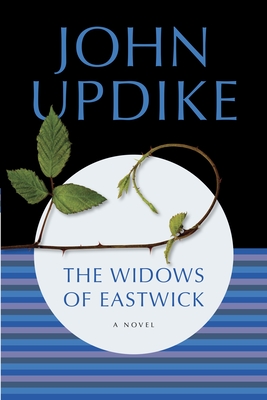 The Widows of Eastwick is the sequel to The Witches of Eastwick. This book wraps up the past thirty years of these three women, Alexandra, Jane, and Sukie. These women travel to exotic places and new lands all rekindling their forgotten fires and recharging them as they were in their prime back in the town of Eastwick, Rhode Island. John Updike portryas these women in new lights: a little older but still filled with that same passion they had in their earlier years.
 In the beginning of the novel, Alexandra travels to Canada after the loss of her late husband. She goes on a group tour of the Canadian mountains. Updike describes these mountain tops and ski slopes with such vivid detail its as if you are there standing next to Alexandra feeling the rushed chill of the wind against your back as if you were standing in the valley of the mountain.
  This cabin is like the place Updike describes in the Canadian Mountains where Alexandra takes her trip. The mountain cabin is secluded and begins to elude to the life that Alexandra is now living. In Eastwick, she had the time of her life, no cares in the world, but after doing that terribly tragic thing to Jenny Gabriel, she escaped into a hideout of life and began excluding herself from her old ways.
 This image details the trip Alexandra and Jane took to Egypt after the passing of both husbands and reconnecting of the two friends. Alexandra rides a camel around one of the famous pyramids while Jane trys to snap shots of her dear friend, although seems to miss all the great shots (on accident).
Citations
1.http://s3.amazonaws.com/adaptiveblue_img/books/widows_of_eastwick/john_updike
2.http://www.adelaide.edu.au/pgsa/events/photo_comp/015_Canadian_Rockies_Canada.jpg
3.http://fernieskivacations.com/images/destinations/cmc.jpg
4.http://travel.nationalgeographic.com/places/images/photos/photo_lg_egypt.jpg
5. Updike, John. The Widows of Eastwick. New York: Random House, 2008.
6.http://www.enotes.com/hamlet-text/act-i-scene-i?start=2
2.http://www.adelaide.edu.au/pgsa/events/photo_comp/015_Canadian_Rockies_Canada.jpg
3.http://fernieskivacations.com/images/destinations/cmc.jpg
4.http://travel.nationalgeographic.com/places/images/photos/photo_lg_egypt.jpg
5. Updike, John. The Widows of Eastwick. New York: Random House, 2008.
6.http://www.enotes.com/hamlet-text/act-i-scene-i?start=2
Subscribe to:
Posts (Atom)